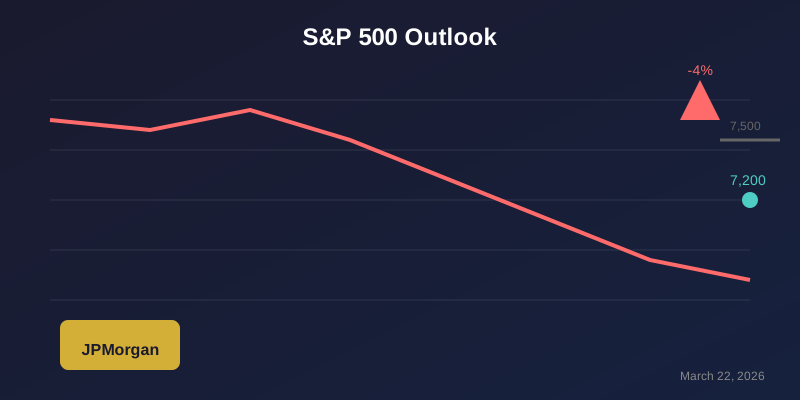
JPMorgan has just delivered a wake-up call to investors. The investment bank has slashed its S&P 500 year-end target from 7,500 to 7,200 — a significant revision that reflects growing concerns about geopolitical headwinds and persistent inflation pressures. In a worst-case scenario, JPMorgan sees the index potentially sliding to 6,000 if current headwinds intensify.
Why the revision matters
The previous 7,500 target was built on assumptions of steady economic growth and easing inflation. That's no longer the playbook. With the Middle East conflict escalating and the Federal Reserve signaling continued caution on rate cuts, JPMorgan is recalibrating. The bank now expects:
- Increased market volatility through Q2
- Slower earnings growth from tech giants
- Higher-for-longer interest rates impacting valuation multiples
What this means for your portfolio
If you're holding a diversified portfolio, you're likely already seeing some turbulence. The key is not panic — it's adaptation. Here's what to consider:
1. Review your asset allocation
A 4% reduction in target doesn't mean sell everything. It means ensuring your portfolio can weather a downturn. If you're heavily weighted in equities, this might be a good time to rebalance toward bonds or cash equivalents.
2. Dollar-cost averaging remains your friend
If you've been investing consistently through a bull market, don't stop now. Market corrections are when long-term investors accumulate shares at lower prices. Use our compound interest calculator to see how consistent contributions grow over time — even with modest market returns.
3. Consider defensive positions
Sectors like utilities, healthcare, and consumer staples tend to hold up better during market turbulence. Energy remains a wildcard given geopolitical tensions — we've seen oil spike to $112/barrel this week.
4. Cash is earning respectable yields
With money market funds yielding 5%+, holding some cash isn't a bad strategy. You're earning yield while waiting for better entry points in equities.
The bottom line
JPMorgan's revised target isn't a prediction of doom — it's a rebalancing of expectations. The S&P 500 at 7,200 still represents growth from current levels. The key is staying rational, diversified, and focused on long-term goals rather than short-term noise.
Use this volatility as a checkpoint. Review your financial goals, run the numbers on our compound interest calculator, and make sure your portfolio matches your risk tolerance. The best investors aren't the ones who predict the market — they're the ones who prepare for multiple scenarios.