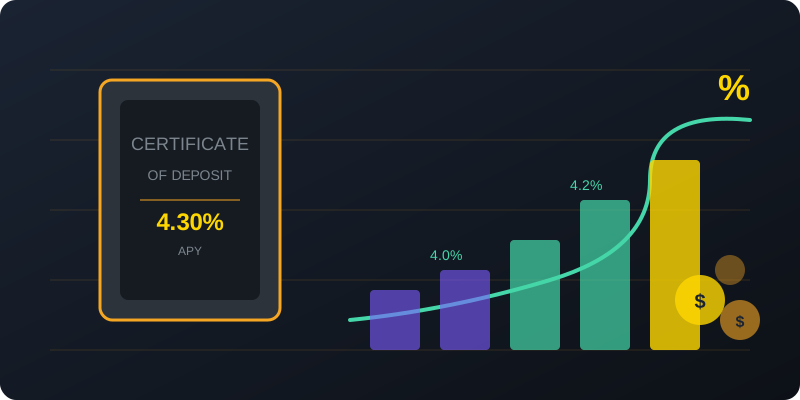
Certificate of deposit rates just hit their highest level in nearly a decade. As of March 17, 2026, the top CD rate in the market sits at 4.30% APY—something we'd have called unrealistic a few years ago. But with the Federal Reserve signaling continued vigilance on inflation and mortgage rates climbing to three-month highs, savers face a genuine dilemma: lock in these rates now or bet that HYSA yields stay high while you keep your money liquid?
The Numbers Don't Lie
Today's CD landscape looks radically different from the near-zero environment of 2021-2022. Synchrony Bank and LendingClub are offering 4.1% APY on various CD terms, while high-yield savings accounts have stabilized around 4% APY. The gap between locking your money in a CD versus keeping it in an accessible HYSA has narrowed to just 30 basis points—but that's still real money on a $50,000 deposit.
Here's the thing most people miss: these CD rates aren't temporary promotions. They're reflecting the current federal funds rate environment, which means they're likely to stay elevated for the foreseeable future. The Fed's own projections suggest rates will remain higher-for-longer, and banks are competing aggressively for deposits as lending demand remains robust.
The Case For Locking In
1. Rate certainty in a volatile market. Mortgage rates just hit three-month highs. If you're thinking about buying a home or refinancing, you already know the cost of waiting. Locking in a CD at 4.30% gives you a guaranteed return regardless of what happens to the broader economy.
2. The math favors patience. On a $100,000 deposit, the difference between 4.30% and 4.00% is $300 per year. Over a 12-month CD term, that's the cost of a decent vacation or several months of groceries. Not trivial.
3. Early withdrawal penalties are manageable. Most CDs today have relatively gentle early withdrawal penalties—typically 3-6 months of interest. If rates do drop significantly, you can access your money without catastrophic losses.
The Case For Staying Liquid
1. Flexibility for opportunities. If you're saving for a down payment, a car, or any major purchase in the next 12-18 months, liquidity matters more than an extra $300 in annual interest.
Where Mortgage Rates Fit In
The connection between CD rates and mortgage rates isn't coincidental. When banks can offer 4%+ on CDs, they need to charge higher rates on loans to maintain their margin. Today's mortgage rates at three-month highs directly reflect the same rate environment that's pushing CD yields upward. If you're considering a home purchase, the math between locking into a CD versus locking into a mortgage rate might seem counterintuitive—but they move in the same direction for the same reasons.
The Takeaway
At 4.30% APY, CDs have earned a place in most savers' portfolios—but they shouldn't be your entire savings strategy. The right move depends on your timeline: lock in short-term CDs (12-18 months) for money you won't need immediately, while keeping your emergency fund and near-term savings in a high-yield account. The spread between CDs and HYSAs is narrow enough that flexibility has real value.
And if you're wondering exactly how much difference these rates make over time? That's the magic of compound interest working in your favor. Whether you lock in a CD or keep your money liquid, the difference between 4% and 4.3% compounds significantly over five or ten years.