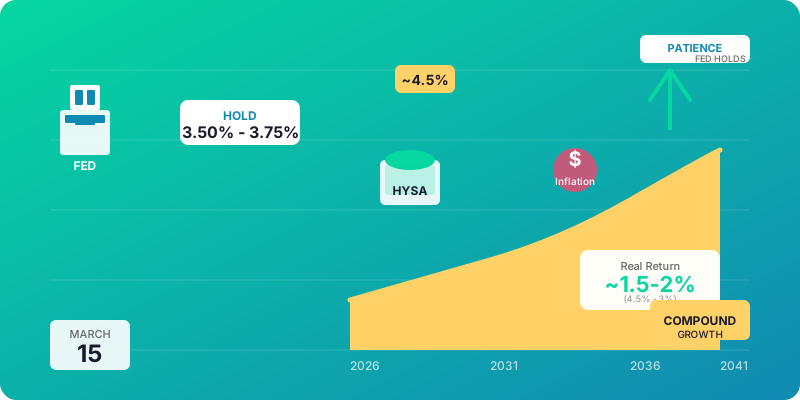
The Federal Reserve kept its benchmark interest rate unchanged at a range of 3.50% to 3.75% in March 2026, marking the second consecutive meeting on hold as inflation remains stubbornly above target. For savers, this news is a mixed bag — rates are higher than the near-zero environment of 2020-2021, but the promise of further cuts has been pushed to the horizon.
What the Fed's Decision Means for Your Money
The central bank's decision to hold steady reflects ongoing concerns about sticky inflation in services sectors. While the labor market has cooled somewhat, wage growth remains elevated enough to keep price pressures alive. Here's what this means for different savings vehicles:
- High-Yield Savings Accounts: APYs remain competitive, with top accounts hovering around 4.25-4.50%. Not bad, but down from the 5%+ peaks seen in late 2024.
- Certificates of Deposit: CD rates have stabilized, with 12-month CDs offering around 4.00-4.30% APY. Locking in longer terms (18-24 months) can get you closer to 4.50%.
- Money Market Funds: Yields have plateaued around 4.25% as the Fed holds steady.
- Bond Yields: Treasury yields have compressed slightly, but 10-year Treasuries still offer around 4.15% — attractive for income-focused investors.
The Real Story: Inflation Is Still Eating Your Returns
Here's the part most people miss: nominal returns aren't real returns. With inflation running around 2.8-3.0%, your "4.5%" high-yield account is really earning you only about 1.5-1.7% in purchasing power. That's still positive — unlike the zero-interest era — but it's a far cry from what it feels like on paper.
Calculate Your Real Returns
Use our Compound Interest Calculator to see how inflation affects your savings over time. Adjust for expected inflation to get a realistic picture of your wealth growth.
Calculate Real ReturnsStrategy for the Hold: Stay Flexible
With the Fed signaling patience rather than cuts, here's how to position your savings:
- Ladder Your CDs: Don't lock all your money into long-term CDs. ladder short-term (6-12 month) CDs so you can reinvest at higher rates if the Fed does cut — or worse, if rates rise again.
- Keep Cash Accessible: High-yield savings accounts still offer solid returns with liquidity. Keep 3-6 months of expenses there.
- Consider I-Bonds: Series I bonds offer inflation-protected returns that reset twice yearly. Current rates around 2-3% plus inflation adjustment make them worth a look for conservative savers.
- Think Beyond Cash: With stocks volatile and bonds offering decent yields, a balanced approach makes sense. The key is understanding your timeline.
The Bottom Line
Yes, the Fed held rates. Yes, savings yields are "good" by recent historical standards. But don't let nominal rates lull you into complacency. Run the numbers with our Compound Interest Calculator — account for inflation, factor in taxes on interest income, and build a realistic expectation of what your savings will actually be worth in 5, 10, or 20 years.
The math doesn't lie: in a higher-rate, slower-growth environment, your savings strategy matters more than ever.